
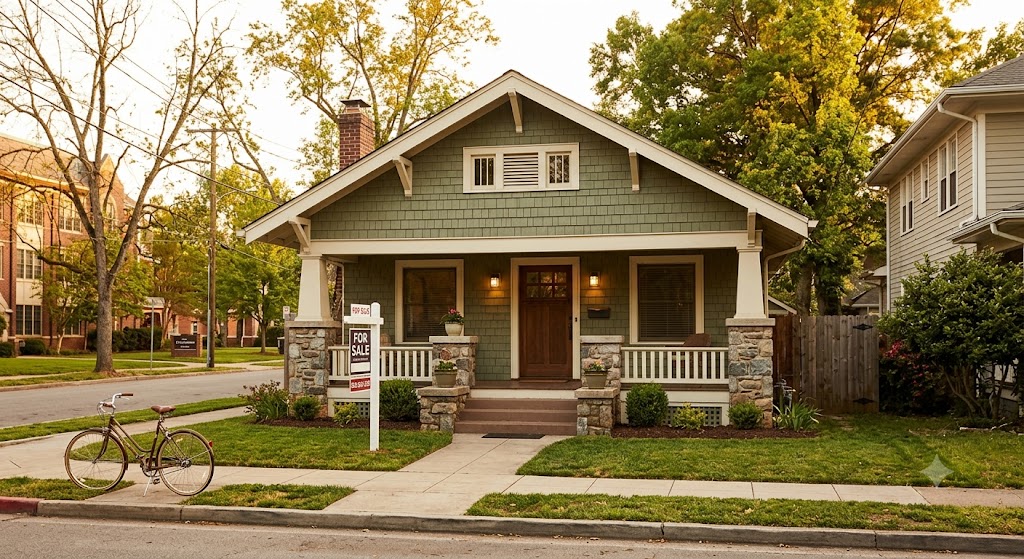
If your student just got into Murray State — or is heading into year two or three — you're probably staring down the same question every MSU family eventually asks: dorm, rental, or… buy something?
It's not a crazy question. Murray State's enrollment climbed to 9,932 students this fall, its second-largest student body in eight years, and the town's rental market has tightened right along with it. For some families, buying a home near campus has turned out to be the smarter long-term move — not just for their student's four years, but as an asset that outlasts graduation. For others, it's more house than they need. This guide walks through both paths so you can figure out which one fits.
Do You Actually Have to Live On Campus?
Mostly, yes — at first. Murray State requires students to live on campus for their first two years (four full-time semesters, not counting summer). There are exemptions: students who turn 21 before the semester starts, those commuting from a parent's home within 50 miles, and a few other documented circumstances can apply to opt out early.
What this means practically: if your student is a freshman or sophomore without an exemption, on-campus housing isn't optional — buying a home won't get them out of that requirement on its own. Where the buy-vs-rent decision really opens up is junior year and beyond, once the on-campus requirement lifts.
What On-Campus Housing Actually Costs
Room and board at Murray State runs in the neighborhood of $12,000–$15,000 a year, depending on the hall and meal plan. Multiply that by two required years, and most families are looking at roughly $25,000–$30,000 before their student ever moves off campus — money that's gone the moment the semester ends.
Renting Off-Campus in Murray: What to Expect
Once a student is eligible to move off campus, Murray's rental market is genuinely affordable compared to national numbers. Off-campus rent near MSU averages around $800/month for a full apartment, and shared houses or apartments with roommates commonly run $400–$700/month per person. The most popular student rental pockets cluster around North 16th Street and Chestnut Street, both within walking or biking distance of campus, and Murray State also runs a free shuttle for students living slightly farther out.
That's a solid deal — but it's still money spent, not money kept.
Should You Buy Instead? Here's the Math Families Are Running
This is a real, growing trend, not a fringe idea. Families across the country are buying homes near college campuses instead of paying rent, for a few consistent reasons:
The case for buying:
- Monthly payments build equity instead of disappearing into a landlord's pocket
- If your student has roommates, their rent can offset — sometimes fully cover — the mortgage
- You control maintenance, safety, and who else lives there
- The property can convert to a straight rental investment after graduation, or even transfer to your student as a head start on homeownership
The case for renting instead:
- You're not on the hook for a roof, a furnace, or a bad tenant situation if your student's roommates don't pay their share
- Selling or managing a property from out of state adds real logistical weight, especially once your student graduates and you're no longer getting firsthand updates on how it's being kept up
- It only pencils out if you're planning to hold the property multiple years — buying and selling in a two-year window rarely beats renting once you count closing costs both ways
Pro tip: The families who do this well treat it like a real estate investment from day one — not a sentimental purchase. That means running the numbers on rental income from roommates, budgeting for maintenance, and having a plan for the property before the "For Sale" sign ever goes in the yard.
How the Financing Actually Works
This is where a lot of families get stuck, so here's the short version:
- If your student can qualify on their own (with a co-signer or not), a standard FHA loan — 3.5% down, 580 minimum credit score — is usually the simplest path, since the student would be the owner-occupant.
- If you're the one qualifying, but your student is the one living there, most lenders treat that as a second home or investment property purchase, which typically means a larger down payment (10–25%) and a higher rate than an owner-occupied loan.
- Non-occupant co-borrower is another route — you're added to the mortgage alongside your student, your income helps them qualify, but you don't live there. Fannie Mae allows this up to 95% loan-to-value.
- "Family Opportunity" style owner-occupied exceptions exist for parents housing an elderly parent or a disabled adult child, and a handful of lenders now extend a version of this to college students — but this isn't universal, and terms vary a lot by lender. If this applies to your situation, ask a lender directly whether they underwrite it that way before you count on it.
None of this is one-size-fits-all — a lender who works Murray's market regularly can tell you which structure actually fits your family's numbers.
Where to Buy Near Murray State
For families buying specifically for a student, proximity to campus matters more than it would for a typical buyer. The North 16th Street and Chestnut Street corridors are the established student-rental zone and tend to hold rental demand well. Beyond that, Murray's broader market gives you room to work with — the median sold price in Murray came in at $313,500 as of May 2026, with homes priced right going under contract in about 5 days.
Ready to Talk It Through?
Whether you're leaning toward buying or you just want to understand what's realistic for your budget, there's no obligation to have it all figured out before you call. We talk through this exact decision with MSU families every year.
Tracy Williams: 270-293-3467
Keith Williams: 270-293-3468
→ Schedule a Free Consultation
→ Use Our Mortgage Calculator
Tracy Williams is a licensed REALTOR® in the Commonwealth of Kentucky and a past President of the Murray Calloway County Board of REALTORS®. Mortgage program details are subject to change and vary by lender — confirm current terms with a mortgage professional. Market data sourced from Redfin and local MLS records; enrollment and housing policy figures sourced from Murray State University; figures reflect conditions as of mid-2026.